Crise no Paraguai leva renúncia do presidente após caso Ueno Bank
A crise do Ueno Bank no Paraguai provocou manifestações, prisão de executivos e motivações detalhadas para a renúncia do presidente Santiago Peña.
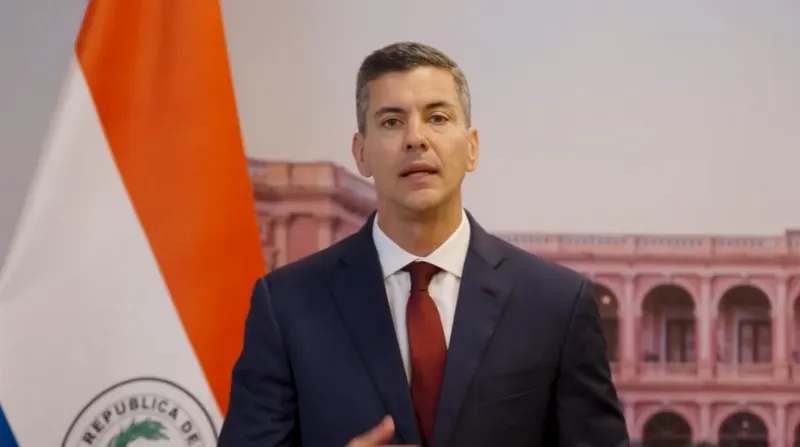
Miguel Vázquez Villasanti, fundador e controlador do Ueno Bank, figura central da crise que abalou o sistema financeiro e político do Paraguai. Aos 36 anos, ele preside o Grupo Vazquez, conglomerado com 26 empresas que atua em áreas que vão da tecnologia à agropecuária.
Formado pela Incae Business School, com especializações internacionais, Vázquez detém quase 76% do capital do grupo que tornou o Ueno Bank sua principal aposta, acumulando US$ 2,8 bilhões (cerca de R$ 13,9 bilhões, na cotação de 06/11) em depósitos ao longo de três anos.
Investigations revealed the bank issued around US$ 146 million (about R$ 724.9 million) in illegal loans, mainly to companies linked to the Grupo Vazquez itself, violating Paraguayan banking regulations that forbid financing acquisitions for companies associated with a bank.
To evade oversight, Vázquez used a fragmented financing scheme with various operations, complicating regulatory control. One maneuver involved simulated purchase contracts where payments allegedly came from buyers' funds but actually included US$ 74.4 million (about R$ 369.4 million) from Ueno loans to intermediaries, constituting illegal indirect financing.
The Ueno Bank, significant in Paraguay with nearly 3 million clients and holding almost half of the country's credit card market, manages about US$ 850 million (roughly R$ 4.7 billion) in public funds including Social Security resources.
After audits, the bank's solvency dropped to less than half the required minimum, prompting the Central Bank of Paraguay (Banco Central do Paraguai, BCP) to initiate a resolution process on November 2 to manage the bank's assets and liabilities.
The financial crisis sparked strong social and political pressure, leading to the resignation of President Santiago Peña and the Central Bank president Carlos Carvallo. Peña, who was a Grupo Vazquez partner until 2025, faces criticism over public institutions' deposits at Ueno Bank during his administration.
Carvallo, who led Financiera Ueno until 2023 before heading BCP, resigned amid opposition demands questioning his oversight of the institution.
Before stepping down, Peña enacted a law accelerating partial reimbursement to Ueno's depositors to mitigate harm.
According to reports by Folha, the Ueno Bank was ubiquitous in Paraguayan society — sponsoring sports stadiums, music festivals, the national football team, and a leading racecar driver. Despite only acquiring a full banking license in 2023, it served 2.9 million Paraguayans, nearly two-thirds of the adult population.
The bank's modern facilities with touchscreen services and cafes contrasted with traditional banks, attracting many who had no previous bank accounts.
On November 3, the BCP took control of Ueno and formally began liquidation. The police arrested CEO Miguel Vázquez, detaining him in a maximum-security prison. Other executives were also detained, some wearing hoods. Charges include breach of trust, accounting irregularities, and attempted fraud.
Desperate clients, unable to access their funds, were restrained by police at branches. The Central Bank president Carlos Carvallo resigned at Peña's request, and opposition groups indicated they planned impeachment proceedings against Peña, who had held shares in Ueno Holding until last year. Vice-president Pedro Alliana similarly faces impeachment threats.
In a video message, Peña assured that 98% of Ueno clients would recover their money through deposit insurance and promised punishment for those responsible. "The financial system is solid," he stated.
The bank's involvement in government business increased substantially under Peña's management, holding about US$ 850 million in public funds, including 10% of public sector retirement resources. The Grupo Vazquez company Itti manages large volumes of sensitive citizen data from numerous government contracts.
Senator Rafael Filizzola, from the opposition, accused Peña of direct responsibility, calling it a "criminal conspiracy" to funnel public resources to Peña-linked private companies. Peña denies wrongdoing.
Ueno's issuance of approximately US$ 150 million in loans to small companies tied to shareholders and employees, apparently violating regulatory rules and jeopardizing the bank's balance sheet, is under investigation.
Supporters of ex-president Horacio Cartes, whose family owns a rival bank and who recently broke political ties with Peña, have amplified pressure on the current administration.
Ueno's US$ 350 million debt securities due in 2031 lost around 12% of their value amid negative news and investor concern. A US$ 100 million recapitalization announced recently was insufficient and too late. BCP officials stated that Ueno's solvency ratio fell below half of the minimum required and further irregularities were uncovered.
Analyst Esteban Caballero noted prevailing uncertainty. Though the ruling Partido Colorado controls Congress, its members diverge between Peña supporters and Cartes allies.
A banking reserve fund was authorized to reimburse Ueno clients up to US$ 38,000 within 15 days. Legislators expedited this process. For amounts exceeding this limit, BCP will provide the "greatest possible protection." Negotiations for Ueno's acquisition by another financial institution circulate, raising fears about the sale of biometric client data collected by the bank, considered sensitive by privacy advocates like Maricarmen Sequera from NGO TEDIC.
The scandal risks tarnishing Paraguay's image as one of South America's most promising economies outside oil countries, with 6.6% growth in 2025. Unlike the 1995 crisis that bankrupted half the country's banks, experts say the financial system remains safe overall, though medium-sized companies holding funds at Ueno will suffer market impacts.
Criticism extends to regulators for delayed action, the bank for generous lending to insiders, and Peña for failing to prevent favoritism suspicions. Peña once dubbed Paraguay a "sleeping giant," but the Ueno saga casts it as a fragile "house of cards."
Veja também
Escritor francês admite uso de ChatGPT e vence Prêmio Goncourt 2026
Em Mundo
Santiago Peña pede 72 horas a mais para preparar defesa no impeachment
Em Mundo
Ex-ministra da Turquia é presa por escândalo de manipulação em fundos de investimento
Em Mundo
Avanço da IA gera ansiedade em 56% dos eleitores nas eleições americanas

Em Mundo
Partido Futuro Nazionale perde apoio e enfrenta crise interna na Itália
Em Mundo
Comentários
Entre na sua conta e seja o primeiro a comentar esta matéria.